Teaching > Cognizant
Being Together Whilst Learning Apart: Australian Graduate Training Features Multigenerational Engagement
By Steven Burrows, Senior Learning Executive, Cognizant Academy — Tue, Aug 23, 2022
The second graduate intake has just been completed by Cognizant Learning & Development Australia for the 2022 calendar year. The program was designed by local members Steven Burrows and Peter McDonald and the training was also delivered by Steven Burrows. This blog introduces the small cohort of four graduates and shares how the cohort ran regarding early learning, multigenerational engagement, program design, topic coverage, the graduation ceremony, and feedback received.
Early Learning
Building on the success of the first trial for the previous cohort, we again offered our graduates an "early engagement experience" via a separate Udemy platform to that used by Cognizant tenured associates. This provided the graduates with some optional learning opportunities whilst waiting for their first day to start. The topics were designed to complement the regular training program and not be redundant with their regular training experience. There were around 10 hours of learning for each business unit, including an introduction to Cognizant, business units, the graduate training program, consulting skills, and some short technical topics.
Multigenerational Engagement
This intake of our graduate training program (otherwise named "Generation Cognizant" or abbreviated to "GenC") launched on Tuesday 14 June 2022 and ran through to Monday 25 July 2022. The group comprised three Data+ associates (formerly known as Artificial Intelligence and Analytics – AIA), and one Digital Experience (DX) associate. The four members were evenly split between the Melbourne and Sydney locations with two each. This geographic spread required a full virtual delivery model, but it also did prompt us to get creative in finding other ways to create engagement.
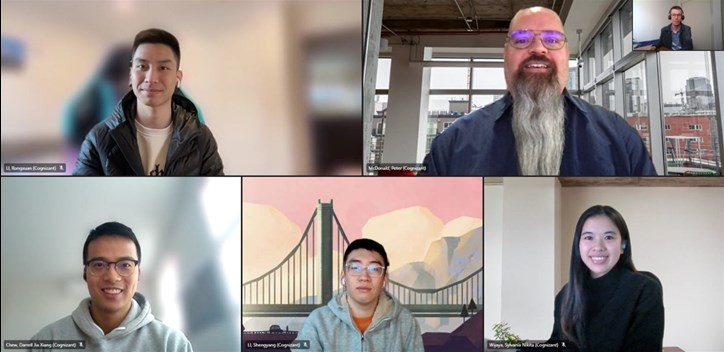
The first major engagement activity was organized in the second week of the training, which was humbly called the "GenC Meet and Greet" event. This event was run in parallel across both the Melbourne and Sydney locations, and we decided to invite all 35 active graduates from all intakes in 2021 and 2022, plus some associates from leadership and corporate function roles. The event was planned as an in-person gathering with a Microsoft Teams bridge to connect the two groups at the beginning. This comprised of People & Culture addressing the full group and providing a presentation of up-to-date important information for early career professionals.
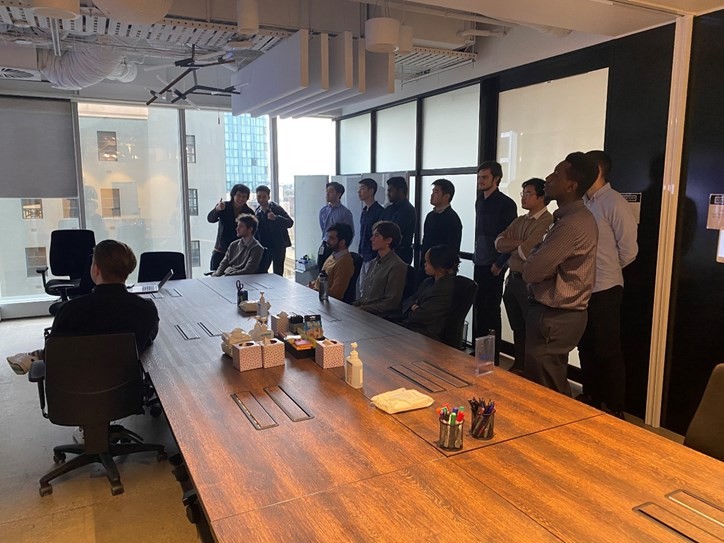
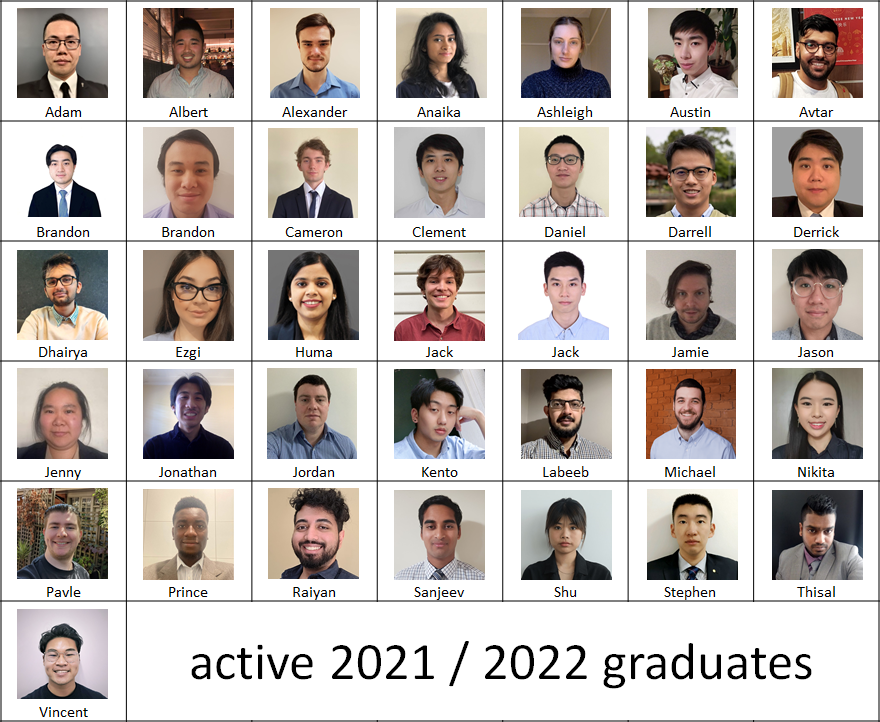
The next segments of the GenC Meet and Greet were conducted separately at the two locations in person. This began with a "people bingo" activity to facilitate introductions between all the different groups of associates in attendance. The facilitation got everyone to ask questions about different backgrounds or personalities of each other and required associates to get five in a row to win by calling "bingo". People bingo was also supported by a photo board with the portraits and names of all our current and recent graduates, which was left on the screen at the end of the Microsoft Teams call to further help everyone to get to know one another. The engagement was so successful, that we had to nudge all the attendees towards the catering provided at the end of the activity. Rarely is there a challenge to get people to eat and drink!
Program Design
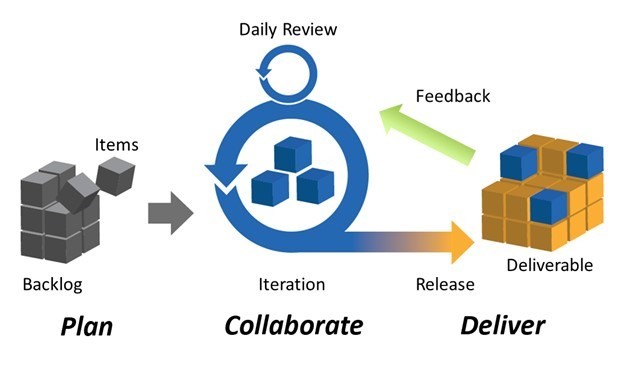
The program design modelled agile project management techniques using agile scrum-like events, which was the approach also taken in the other 2021 and 2022 intakes. This meant that the graduates and the trainer participated in all agile events for each sprint, which were five working days in length. Each sprint began with a sprint planning meeting to articulate the tasks for the sprint ahead. The tasks discussed in the meeting were recorded and maintained in Microsoft Planner as the chosen agile card wall. Throughout the sprint, updates and impediments were shared each morning during the daily scrum meetings. Then at the end of the sprint, a sprint review was conducted for associates to give practical demonstrations of their mastery of the learning materials. Immediately following this was the sprint retrospective meeting for collecting feedback.

Additional instructor-led sessions included topic overview sessions that explained and demonstrated the subject matter, which also gave opportunities for questions and answers. All sessions were virtual, and video recordings were always made for COVID-19 absences and similar contingencies. Beyond the instructor-led sessions, the self-paced courses were completed in between, which can be considered as a blended mode of learning given the above supports available.
Topic Coverage
The Australian GenC curriculums had been optimized so that the common topics were done together. This increased group sizes and allowed for more instructor-led training that could be provided otherwise. In the case of this intake, the Data+ and Digital Experience topics overlapped by almost 50%, meaning a lot of commonalities could be utilized. Also, the learning was supported by self-paced courses that were mostly sourced from our learning content partners including Udemy.
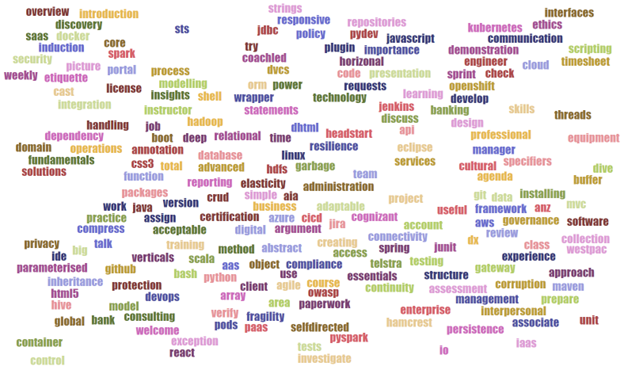
The learning was reinforced by knowledge-based assessments and skill-based assessments for each sprint. The knowledge-based assessments were multiple choice assessments hosted by our enterprise learning management system. The skill-based assessments were conducted during the sprint review meetings to demonstrate what the associates had learned in the preceding sprint. Examples of sprint review topics were: (i) teach back a summary of a behavioural topic; (ii) demonstrate a data engineering solution published in the cloud; (iii) run, discuss, and critique pre-prepared SQL queries on a common database hosted by the trainer; and (iv) present and demonstrate advanced topics such as PowerBI and Spring.
Engagement Opportunities
Members from both the Data+ and Digital Experience business units had a "meet your business unit" connect, where Abhishek Sehgal and Adrian Baxter hosted the graduates respectively. These leaders provided an overview of the business unit, types of work, community engagement, clients, projects, and a forward look at deployment opportunities. Graduates also had time to ask their questions, and they appreciated knowing more about work after the graduate training program.
Other special events that ran during the graduate training program included a half-day welcome session from People and Culture, sessions lasting one-and-a-half days relating to induction from Learning & Development, a resume writing workshop facilitated by Talent Acquisition, plus numerous opportunities for the graduates to meet with home managers, mentors, and buddies.
Graduation Ceremony
We ran a graduation ceremony for the second time, following the success of the previous intake. The stakeholders invited included senior leadership, business unit leaders, corporate functions, the graduates themselves, and others. This one-hour event covered the program design, program outcomes, experiences of the graduates (spoken by two of our graduates), and notes from our leaders (Tessa Schofield, Abhishek Sehgal, and Rajas Rout), the awards ceremony, and acknowledgments.
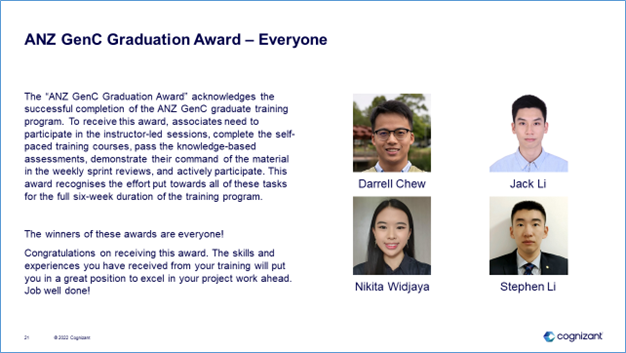
The awards comprised some individual awards for exceptional individual performance in areas such as attitude and knowledge. We also acknowledged the overall graduation from the training program, which all members of the cohort successfully completed. The expectations to graduate required participation in the instructor-led sessions, completion of the self-paced training courses, passing the knowledge-based assessments, demonstrated understanding of the material in the weekly sprint reviews, and active participation.
Conclusion
Learning & Development handed the baton to the business units after the conclusion of the training, for the graduates to onboard and transition to their project work. Some stretch learning options were also provided so that any gaps could be filled in the intervening period. The stretch learning included suggestions for domain learning, technical deep dives, performance management, and industry certification among others.
We also finished the collection of feedback across the program. The quantitative feedback came from the per-topic feedback surveys, where the effectiveness of the instructor, courseware, environment, support, and overall rating was measured. The scores we received from the five-point Likert scale question categories are summarised below. These surveys also had a question on the Net Promotor Score (NPS), as a measure of customer satisfaction. The survey respondents were asked how likely they would recommend this training to their colleagues on a ten-point scale. All metrics significantly exceeded our benchmark targets of Likert = 4.35 and NPS = 40 as shown below.

The feedback also included a qualitative component collected from both the sprint retrospectives and the topic feedback surveys. Feedback about things that worked well coming from the sprint retrospectives included communication, sprint review presentations, Udemy courses, IT support, and the ability to raise concerns and get them answered. We also collected a lot of feedback from the topic feedback surveys, including comments about having no fear of asking questions, having sessions recorded, trainer demonstrations, the cloud credits and support for the cloud topic, and "enjoying every minute". Finally, we also asked all graduates to share their feedback directly with the broader Cognizant community using testimonials that we have repeated below.
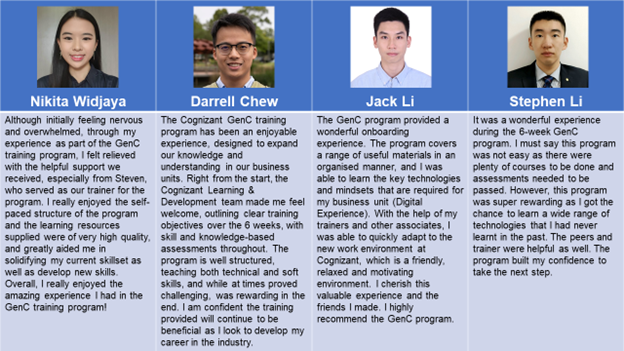
Steven and Peter from Cognizant Learning & Development Australia thank Talent Acquisition, People & Culture, business unit leaders, account leaders, senior leadership, and others, for helping to make the program successful. There are no further GenC intakes planned for 2022, so we plan to resume this program again for intakes in 2023. In the meantime, we have work continuing with our other early career professionals for our Adelaide Traineeships that joined us in the last months via our new Adelaide Delivery Centre.