Teaching > Cognizant
Digital Skills Creation at the Adelaide Global Delivery Centre
By Steven Burrows, Senior Learning Executive, Cognizant Academy — Mon, 21 Nov, 2022
The Adelaide Traineeship program is currently nearing its end for the 2022 calendar year. The program was planned, designed, and developed by many stakeholders across four distinct program phases. This blog introduces the program and explains the work and achievements of the trainees throughout. In reading this article, it should be noted that the Adelaide Traineeship program is separate and distinct from our local Graduate Training Programs.
Program Structure and Participants
The Adelaide Traineeship program leverages the Federal Government and South Australian State Government incentives associated to digital skilling, effectively being a joint funding arrangement between Cognizant and the respective governments. The program is located at Cognizant’s new Adelaide Delivery Centre and can be considered as a highly noteworthy 2022 initiative here. The goal of the program is to enable associates new to IT, providing Cognizant a novel method to tap the IT talent marketplace other than university graduates. To impart the necessary training, knowledge and experience, the program was designed to run in four distinct phases that we will label A to D.
- Certificate IV in IT: Vocational training qualification managed externally and running parallel with Cognizant employment.
- Cognizant training/project: Additional training and a group project run by Learning & Development.
- Project experience: Early client project experience.
- Specialisation training: Additional training specific to practices.
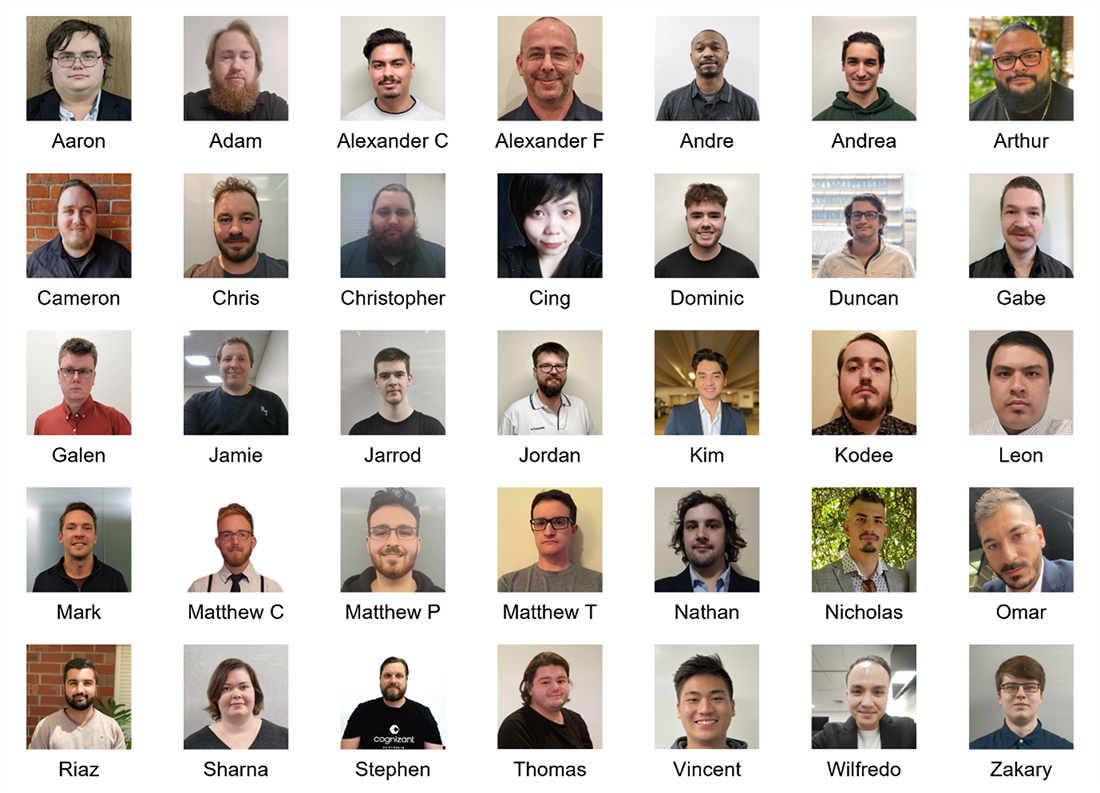
We have a total of 35 active programmer analyst trainees in the program. All trainees joined in March 2022 with staggered starts. We welcomed to the business 17 of these trainees in early March, followed by the remaining 18 trainees just three weeks later in late March. The trainees are generally new to IT, with backgrounds in other areas such as retail, hospitality, trade, and school leavers, among others.
Phase A – Certificate IV in IT: March, April, and May
Our trainees began with full time training with the Academy IT registered training organisation (RTO) to work through the first 6 of 12 units of competency of their Certificate IV in Information Technology. This intensive period provided a fast-track start into the world of information technology for the trainees, leading to their first IT-related qualification for most. After the completion of the 12 weeks, the trainees have been given opportunities to continue with the remaining parts of their Certificate IV in a part time capacity in parallel with the other activities mentioned in the sections below. This most recently has been in the form of a flexible working arrangement on Fridays that has allowed the trainees to choose how to use their time on this day. The trainees have been given the requirement to complete their Certificate IV within a 2-year period from when they started.
Phase B – Cognizant Internal Training and Project: June, July, and August
Next up, our trainees spent a 6-week period with Peter McDonald and/or Steven Burrows from Cognizant ANZ Learning & Development to undertake additional Cognizant internal training. The goal was to cover additional topics not covered in the Certificate IV in IT and to prepare the trainees for a group project. The trainees went through Phase B in the same groups as Phase A with 17 and 18 active trainees respectively.
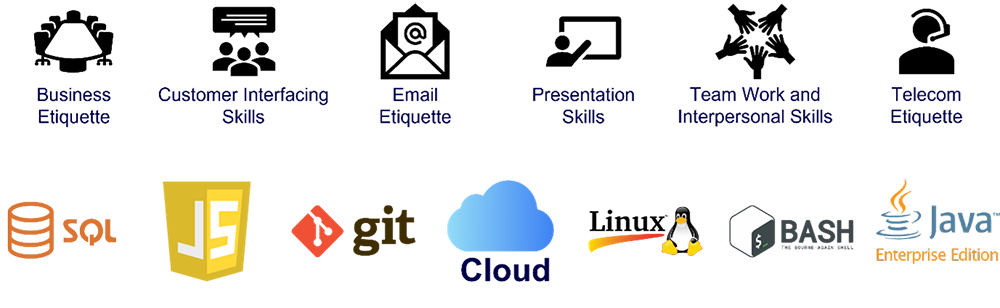
The first 3 weeks of this 6-week period comprised of additional training on soft skill and technical topics. The soft skills included business etiquette, customer interfacing skills, email etiquette, presentation skills, teamwork, and telecom etiquette. The technical skills included SQL, JavaScript, Git, Cloud, Linux, Bash, and Java EE. The choices for the technical skills were in part motivated by skilling needs for the group project.
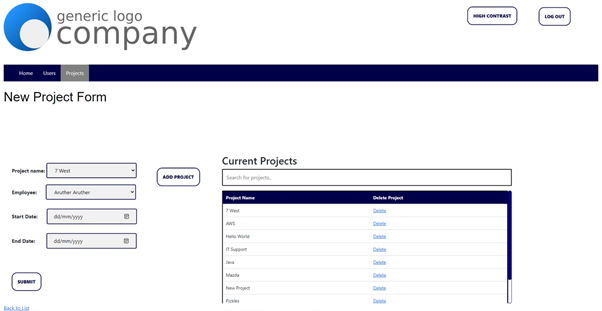
The other 3 weeks were allocated for the group project. Teams were formed with 7 to 10 trainees each. The scenario given was for the trainees to create a web-based project resource management tool. This involved codifying three main entities with the necessary front-end and back-end logic. The entities were employees, projects, and allocations, where allocations represent which employees are assigned to which projects. This was built in Java EE and supported by SQL for data storage, Git for version control, cloud for hosting, and Linux for interacting with the remote host.
At the end of Phase B, there was some spare time before the next phase of the program, and this allowed the trainees to extend the base functionality of their project. The main motivation was driven by the trainees themselves when they realised that some extensions could satisfy parts of their Certificate IV. This work continued over several more weeks, and extra features were added including authentication, themes, security, additional entities, and visual appearance improvements, among others.
Phase C – Client Project Experience: June, July, and August
The client project experience has varied for different associates. The first opportunity came for 17 associates around the time of the Phase B training mostly between June to August. They were assigned to a media company for a Salesforce project. This engagement lasted between 2 weeks to 3 months for different associates, depending on which associates were assigned at which times. The scope of work included a small amount of user acceptance testing and a larger amount of training documentation.
Other smaller opportunities have since presented themselves from September onward for at least 7 associates. This included 3 associates returning to the media company for additional Salesforce work, 2 associates going to a television company for DevOps work, 2 associates going to a data/analytics company for cloud work, and a small number of others pending. It is noted that not all associates have had a client project experience opportunity to date.
Phases B and C – Milestone Graduation and Project Showcase: August
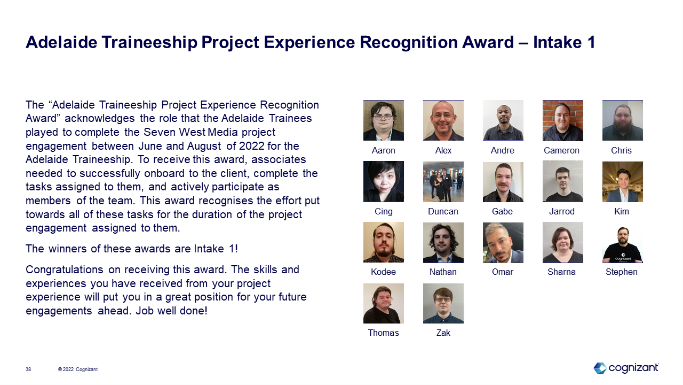
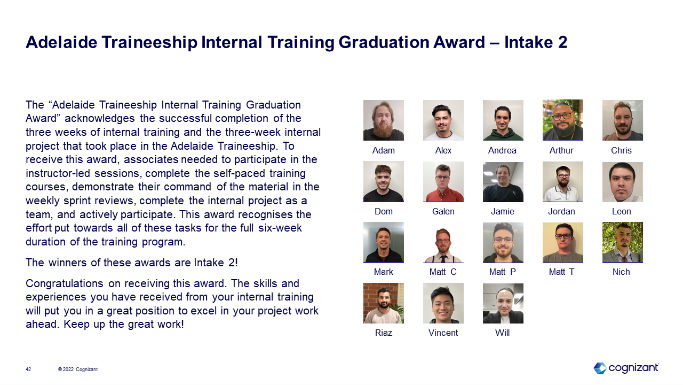
A special celebration was conducted on 31 August to celebrate all the achievements together for Phases B and C. Steven Burrows presented an overview of the work completed and 11 of the trainees gave 2-minute lightning talks about various aspects of their Phase B or C work. Other segments were for the leaders to share their feedback, and an awards ceremony. The event was attended by several members of the senior leadership team, key staff in Adelaide, some corporate function members, and of course the trainees themselves. The work presented was exceptional and was very well received by all in attendance. The above photos are some of the recognitions received.
Phase D – Specialisation Training: September, October and onward
The Phase D specialisation training launched early in September. The groupings from Phase B were wound up and the trainees were divided into 3 new groups for Guidewire (6 associates), Salesforce (13 associates) and ServiceNow (16 associates) based on their voting preferences and anticipated future project needs. Each of the 3 streams has been supported by Steven Burrows as the facilitator and some combination of subject matter experts (SMEs) and capability academy associates. Each stream included a series of learning activities designed to lead to a certification outcome. As described further below, the time estimated to complete each stream was different. The time estimates were based on a working week from Monday to Thursday, with Friday reserved for a flexible working arrangement that largely catered for continuing work on Phase A.

Guidewire Stream This stream has Arpit Bung from New Zealand as the SME and is supported by Claire Rasmussen from Sydney. The trainees have been split into 2 groups of 3, with one group specialising in ClaimCenter and the other specialising in PolicyCenter, leading to certification respectively for each. Arpit has taken a very active role in guiding these trainees, which has included technical sessions, daily scrum meetings, individual mentoring, and sprint planner management. The learning materials mostly comprised of the Guidewire Education learning platform and some internal domain learning materials for insurance. The estimated time for this stream is 14 weeks. At the time of writing this article, the trainees are passing the half-way point of their learning.
Salesforce Stream This stream has Kiran Nayak, Santosh KV, Alejandra Rodriguez, Srinivasan Jayaprakash and Mahmood Kamal sharing the SME role, all of whom are local in Adelaide. All trainees are working on a common curriculum leading towards Salesforce Certified Administrator. The 5 SMEs organised a series of 9 SME connect sessions shared roughly evenly between them all. The topics covered were designed to have a connection to Salesforce and included Agile, JIRA, testing, CI/CD, cloud, and client experiences. The learning materials comprised of courses from the Trailhead learning platform. The estimated time for this stream is 7 weeks. At the time of writing this article, most trainees are finishing the last parts of their base learning, and others are waiting for certification vouchers to certify.
ServiceNow Stream This stream has Preethi G from India as the SME. All trainees are working on a common curriculum leading towards ServiceNow Certified System Administrator. The learning materials comprised of the NowLearning and Udemy learning platforms. The estimated time for this stream is 5 weeks. At the time of writing, the base learning has largely been completed by the trainees, and advice is pending regarding next steps.
Areas of Success and Challenge
With the Adelaide Traineeship program largely complete now for 2022, this section aims to review some of the noteworthy successes and challenges that have been observed to date. Below are 3 successes and 3 challenges that have been identified.
Success 1 – Local involvement The local facilitator, SME, and related support spanned Adelaide, Melbourne, Sydney, and New Zealand. Whether the support was in person or virtual, these supports were all very successful, and we thank everyone who participated. This observation is supported by the excellent feedback scores received for the local trainers, facilitators, and SMEs. The feedback scores are described in depth in the next section below.
Success 2 – Exceeded expectations There were clear instances where the trainees performed well above and beyond their expectations. One example was the independent work ethic that the trainees applied in extending their Phase B internal project work to Academy IT assessment requirements. Another was the milestone graduation and project showcase event mentioned above that greatly impressed all in attendance.
Success 3 – Community building The opening of the new Adelaide Delivery Centre provided opportunities for the trainees to work productively together in a newly outfitted office environment. The local leadership required the trainees to attend the office in person more frequently than other employees to fast track a positive community building atmosphere. Local leadership routinely observed the trainees working well together with a positive buzzing atmosphere of peer support.
Challenge 1 – Offshore involvementWe have observed that additional time is required to help the ServiceNow trainees understand the concepts and application in more detail, specifically interactive SME working sessions. The time allocated to date mostly provided for Q&A sessions that required the trainees to prepare questions from their self-paced learning ahead of time. Options for further SME sessions include guided practical experience and support to bridge perceived or actual gaps between practice exam questions and the learning materials. This request has been raised and is currently being worked through.
Challenge 2 – Project opportunities It has been great to see billable project opportunities given to many of the trainees already, but the timings of these engagements have sometimes been a challenge. These opportunities ran when Phase B or D training activities were in progress, causing training to be delayed or suspended for some associates. We acknowledge that deployment of our early career professionals is a high priority, and that this challenge requires careful balancing between the needs of the training and the needs of the business.
Challenge 3 – Business unit allocation The Adelaide Trainees are unique in that their traineeship does not require them to be allocated to a particular business unit at the commencement of their employment. In fact, these discussions are happening around now at the time of this writing. Delayed business unit onboarding provides an excellent opportunity for the trainees to familiarise with parts of the business over an extended period and have opportunities to express where their future preferences lie. In contrast, benefits received from being members of business unit communities are postponed. An example of this was when we needed to seek Salesforce exam vouchers via an alternative method.
Quantitative and Qualitative Feedback
A range of feedback was collected across the program. The quantitative feedback came from feedback surveys taken at key points, where the effectiveness of the instructor, courseware, environment, support, and overall rating were measured. The scores we received from the 5-point Likert scale question categories are summarised below. These surveys also had a question on the Net Promotor Score (NPS), as a measure of customer satisfaction. The survey respondents were asked how likely they would recommend this training to their colleagues on a 10-point scale. As a point of reference, Learning & Development aspires for benchmark targets of Likert = 4.35 and NPS = 40.
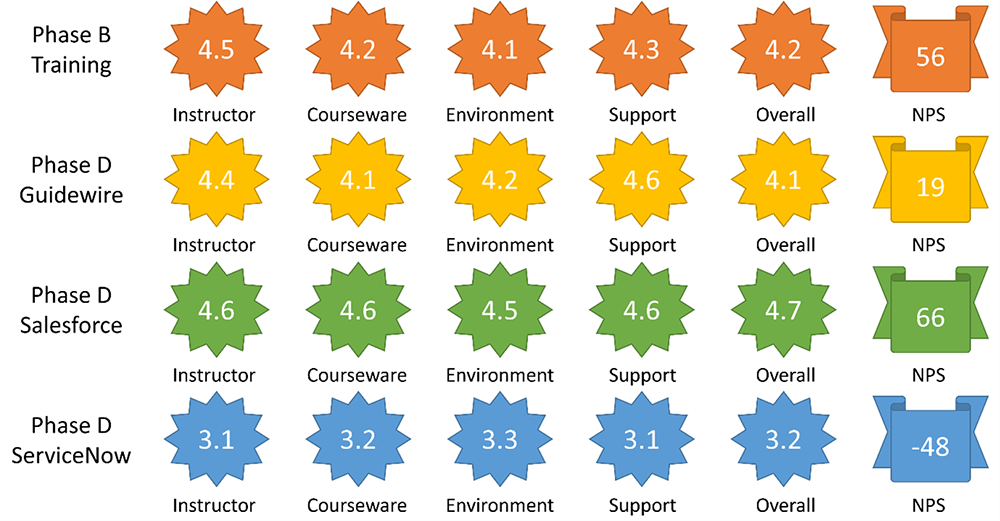
The highest scores were received for the Phase D Salesforce training, with all metrics well above the benchmark scores. We feel that the team-based SME approach comprising of 5 SMEs contributed a lot towards this outcome. This provided a wide variety of expertise that the trainees could draw upon to support their learning. Moreover, the Salesforce training was the only one with a face-to-face component among all Phase B and D activities, and having both SMEs and trainees together in Adelaide was a huge benefit.
Close behind, the next highest scores were for the Phase B internal training and the Phase D Guidewire training, with all metrics in the ballpark of the benchmark scores. In each case, there was a trainer or SME that took full ownership of the respective phase, and was able to deliver in full and provide all of the support needed. Special commendation is given to Arpit Bung as the SME for the Phase D Guidewire training, supported by Claire Rasmussen. Arpit provided a generous amount of support for his area and achieved excellent scores for the instructor role (4.4/5) and learner support (4.6/5).
For the last set of scores for ServiceNow, the Likert ratings were slightly above a middle score of 3/5, and the NPS was negative at -48. The underlying data for the NPS result showed that 60% of the respondents were detractors, meaning that the group generally do not recommend this training to others in its current form. As discussed above, a request has been raised for additional interactive SME sessions.
For qualitative feedback, we regularly collected comments at both team retrospective meetings and for individual feedback surveys. There are too many comments to share them all, but below is one key comment matching each of the quantitative score sets from above regarding aspects of the training that were liked:
- Phase B: “The objectives are clear and easy to understand -- it is easy to find all the resources needed to complete the objectives.”
- Guidewire: “Guidewire team coming together with the learning and helping each other out and sharing information is really good to see.”
- Salesforce: “Trailhead and the many SME connects are very informative. Very appreciative of them spending the time with us.”
- ServiceNow: “Vince taking time to listen to our concerns regarding the training. Also the extra bits and pieces the team found to add to our study options.”
Finally, we acknowledge that the Phase A external training and the Phase C project experiences to date have been largely successful and well received as well. Since these phases were not managed by the Cognizant Learning & Development corporate function, we do not have the same kinds of data available to us like Phases B and D, so we are not elaborating further here.
Conclusions
The Adelaide Traineeship program has been a long-running program across most of the 2022 calendar year and has spanned four unique phases: external training (Phase A), internal training and project (Phase B), client project experience (Phase C), and specialisation training (Phase D). A lot of time, planning and effort has gone into this program, which has successfully integrated associates new to information technology and turned them into skilled information technology professionals. We wish them the best with their continuing professional development and experience as they further integrate themselves into the business.
This program would not be possible without the exceptional efforts of all the stakeholders involved. We wish to acknowledge the local leadership (Vince Colasante and Peter Miller), our external RTO partner Academy IT (including Brian Peel and Michael Williams), Learning & Development (Peter McDonald and Steven Burrows), our clients employing our trainees, all of our SME and capability academy colleagues for the specialisation training, Talent Acquisition (including Mantri Boange and Simone Epskamp), People & Culture (including Kate Vickers), senior leadership (including founding sponsors Tessa Schofield and Craig de Vries), the South Australian Government, the Federal Government, all of the trainees, and all others.